

Paid Advertising for small business
Small businesses primarily use three paid ad options: Google Ads (62%), Facebook Ads (56%), and Instagram Ads (34%). These Paid Advertising platforms offer affordable pricing models, robust targeting options, and measurable results. Google Ads targets customers actively searching for products or services, while Facebook and Instagram Ads target specific audiences based on demographics, interests, and behaviours.
Most businesses nearly (71%) spend less than $1000 per month on online advertising, with Paid Advertising lead generation and website traffic being top priorities. Google Ads, Facebook Ads, and Instagram Ads are favoured due to their cost-effectiveness, targeting capabilities, and measurable results. Paid Advertising platforms like Google, Meta provide built-in analytics, making it easy for small businesses to track and optimize their ad performance. Clarifu Infotech has the expertise to manage and optimize Google Ads and social media ad campaigns, helping small businesses achieve their online advertising goals.
How Google Ad Meets The Business Objectives ?

Search Ads of Google
- Increasing visibility for targeted keywords
- Target users actively searching for products or services, driving high-intent traffic to your website.
- Target users based on location, language, and device.
- Compete for top ad positions in SERP, regardless of business size.
- Cost-per-click (CPC) pricing model, only pay for ads that are clicked.
Google Display Ads
- Appear on websites, blogs, and mobile apps across the Google Display Network, increasing brand awareness.
- Google Dynamic Ads to Automatically generate ads based on your website content, driving traffic and sales.
- Target users based on demographics, interests, and behaviors.
- Cost-per-thousand impressions (CPM) pricing model, pay for ad views.
Google Shopping Ads
- Appear on Google search results pages and Google Shopping, increasing visibility for product-based businesses.
- Showcase products directly in search results, driving traffic and sales.
- CPC pricing model, only pay for ads that are clicked.

Additional Options
- Google Local Ads to Appear on Google Maps and Google search results pages,
- Google Remarketing Ads to Target users who have visited your website, encouraging them to return and make a purchase.
- Custom Match Ads to Target users based on email lists or other custom data.
How Meta Ad Meets The Business Objectives ?
Improve Visibility
- Facebook Page Post Ads: Appear in users’ newsfeeds, increasing visibility for your business page and content.
- Facebook Display Ads: Appear in the Meta sidebar, increasing brand awareness.
- Facebook Instant Experience Ads: Provide a seamless, immersive experience for users, increasing engagement and visibility.
- Facebook Local Ads: Appear on Facebook and Instagram, targeting users near your business location.
Website Traffic &Sales
- Facebook Conversion Ads: Optimize for conversions, driving sales and revenue.
- Facebook Retargeting Ads: Target users who have visited your website, encouraging them to complete a purchase.
- Facebook Carousel Ads: Showcase multiple products or services, driving traffic and sales.
- Facebook Lead Ads: Allow users to submit lead information directly within the ad, driving conversions.
Target Specific Audiences
- Demographic Ads: Target by age, location, interests, and behaviors.
- Interest-Based Ads: Target users by interests, hobbies, and activities.
- Lookalike Ads: Target users similar to existing customers or followers.
- Custom Audience Ads: Target users based on email lists, customer IDs, or other data.
- Retargeting Ads: Target users who visited your website or engaged with your content.
Compete Larger Businesses
- Auction-Based Ads: Compete for ad space, priced by ad auction.
- Lookalike Ads: Target similar audiences to existing customers.
- Retargeting Ads: Target users who visited your website.
- Image/Video/Carousel Ads: Pay for ad views (CPM pricing model).
- Ads with Budget Optimization: Automatically allocates budget to top-performing ads.
Bring Faster Inquiries With PPC
Is “it “Pay-per-click” Worth ?
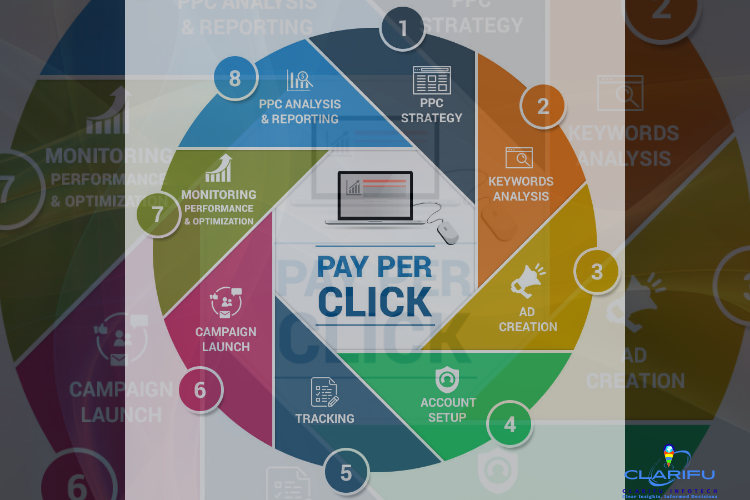
Pay-Per-Click (PPC) advertising drives faster inquiries by targeting users actively searching for products or services like yours. By leveraging Google Ads and Facebook Ads, you can create targeted campaigns that deliver instant results, enabling rapid testing of messaging, targeting, and bidding strategies. With PPC, you only pay for clicked ads, ensuring engaged users, and can allocate budgets efficiently to achieve a better Return on Investment (ROI). This cost-effective solution is easy to implement, manage, and scale, making it ideal for businesses of all sizes.
What assistance can we provide for you ?
Ad. Planning
- Keyword Research: Identify relevant keywords and phrases to target.
- Campaign Strategy: Develop a customized campaign strategy aligned with business goals.
- Budget Planning: Determine optimal budget allocation for maximum ROI.
- Target Audience Identification: Identify and define target audience demographics, interests, and behaviors.
PPC. Setup
- Create and configure ad accounts and structure PPC campaigns based on objective and budget, platform.
- Develop and gather ad assets e.g. images, videos, Landing Pages etc.
- Develop compelling ad copy to drive clicks and conversions.
- Set up ad extensions (e.g. sitelinks, callouts) to enhance ad visibility.
Ad. Calibration
- Tracking metrics such as CTR, conversion rates, & cost-per-click (CPC) to identify trends, patterns, and areas for improvement.
- Optimize Ad Copy and Assets as desired
- Ad bidding strategies adjustment based on above to optimize ad visibility, clicks, & conversions.
- Pause underperforming ads and reallocating budget to top-performing ads.
PPC Management
- Continuously monitor ad performance, tracking metrics such as CTR, conversion rates, and CPC.
- Regularly optimize ad targeting, bidding, ad copy, and landing pages to improve ad relevance, CTR, and conversion rates.
- Manage and optimize ad budgets to ensure maximum ROI, allocating spend to top-performing ads and pausing underperforming ones.
- Ad Rotation and Refresh: Rotate ads to prevent ad fatigue, refresh ad creative to maintain relevance, and ensure compliance with platform policies and brand guidelines.
Ad. Execution
- Full-Scale Ad Launch: Launch ads at full scale, utilizing optimized targeting, bidding, and ad creative.
- Ongoing Ad Monitoring: Continuously monitor ad performance, tracking metrics such as CTR, conversion rates, and CPC.
- Ad Frequency and Rotation Management: Manage ad frequency to prevent ad fatigue and rotate ads to maintain relevance and engagement.
- Plan for scalability and expansion, identifying opportunities to increase ad spend, expand targeting, and explore new ad channels and formats.
Ad. Optimisation
- Ongoing Campaign Monitoring: Continuously monitor campaign performance and identify areas for improvement.
- Conversion Tracking and Analysis: Track and analyze conversions to measure campaign success.
- Ad Optimization: Continuously optimize ad copy, targeting, and bidding strategies for better performance.
- Regular Reporting and Analysis: Provide regular reporting and analysis to inform business decisions and drive campaign improvement.